Your Story. Your Vision. Your Topics.
Multiple stories explore diverse human experiences, blending emotion, conflict, growth, and unexpected connections across narratives.

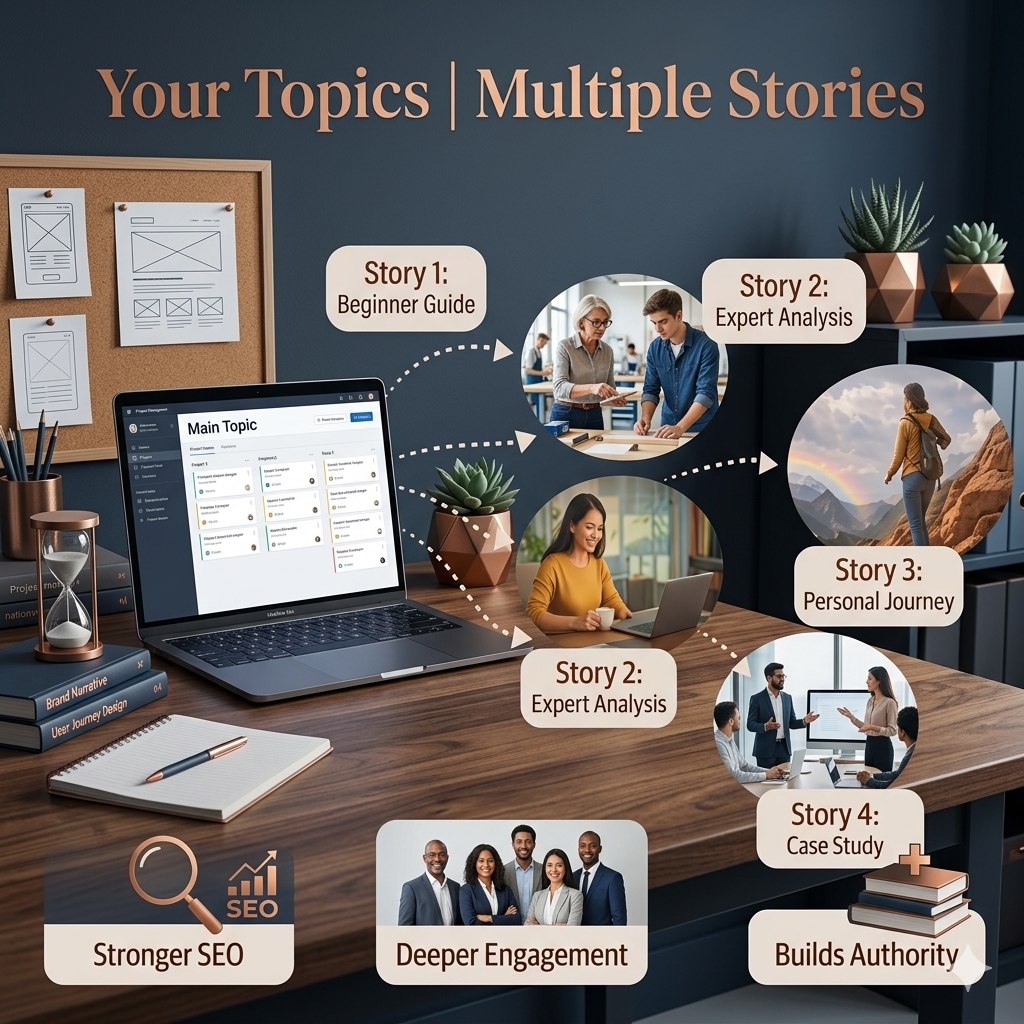
your topics | multiple stories – A Guide to Modern Storytelling
In today’s fast-moving digital world, storytelling has evolved far beyond a single narrative. Audiences no longer want just one perspective—they crave depth, diversity, and authenticity. That’s where the concept of “your topics | multiple stories” becomes powerful. Instead of presenting a topic in a linear way, you explore it through multiple angles, voices, and experiences, creating richer and more engaging content.
This approach is especially valuable for marketers, bloggers, and content creators who want to stand out in a crowded online space.
Why Multi-Perspective Storytelling Matters Today
Modern audiences are more informed and selective than ever. They don’t just consume content—they analyze it, compare it, and question it. A single narrative often feels incomplete or biased.
When you use your topics | multiple stories, you give your audience a 360-degree view of a subject. This builds trust and keeps readers engaged longer. For example, instead of writing a single article about starting an e-commerce business, you could share stories from a beginner, a failed entrepreneur, and a successful seller. Each perspective adds value and realism.

Why Audiences Prefer Multiple Perspectives
People relate to stories differently based on their own experiences. A single viewpoint may resonate with some but alienate others. Multiple perspectives solve this problem. Here’s why this approach works so well:
- It increases relatability by addressing different audience segments.
- It creates emotional depth and connection.
- It reduces bias and builds credibility.
- It encourages critical thinking and engagement.
For instance, a blog about remote work can include stories from freelancers, corporate employees, and digital nomads. Each perspective makes the content more inclusive and impactful.
How to Select Topics That Work Best for Multiple Stories
Not every subject is suitable for a multi-story approach. The strongest candidates usually contain universal themes, open-ended questions, or varied perspectives from different people involved.
What topics work best for multiple stories?
Some topics naturally expand into richer narratives, such as:
How to identify strong storytelling topics?
To find topics that support multiple narratives, look for ideas that naturally split into different viewpoints or sub-stories:
What It Means to Tell Multiple Stories Around One Topic
At its core, Your topics | multiple stories means exploring a single subject through different narratives rather than repeating the same idea.
This doesn’t mean adding random content. Each story should serve a purpose and highlight a unique angle. For example:
Together, these stories create a complete picture that a single narrative cannot achieve.
Structuring Multi-Story Content for Maximum Impact
Structure is critical when working with multiple narratives. Without a clear framework, your content can feel scattered.
A strong structure includes:
- A clear introduction to the main topic.
- Separate sections for each story or perspective.
- A logical flow connecting each narrative.
- Key takeaways that unify the stories.
For instance, if your topic is “building an online business,” you could structure it like this:
- Beginner’s journey.
- Struggles and failures.
- Breakthrough moments.
- Scaling strategies.
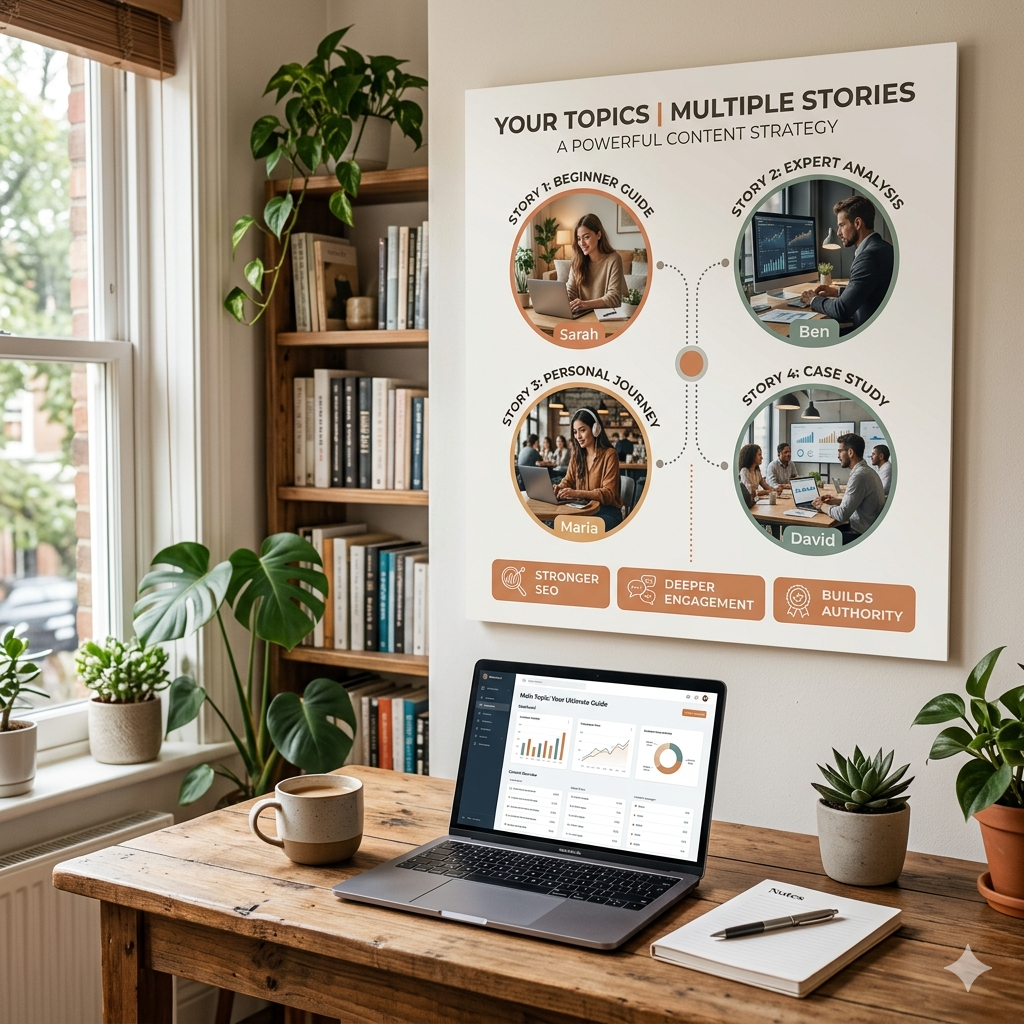
Step-by-Step Framework for Building a Multi-Layered Story
A multi-layered story weaves surface-level plot events with deeper character arcs and thematic resonance for emotional impact. Here’s a concise step-by-step framework to build one.
1
Define Key Narratives
Identify the different perspectives within your topic. For example:
- The farmer’s perspective — Daily challenges and traditional farming practices
- The consumer’s perspective — Decisions between organic and budget-friendly options
- The policy perspective — Regulations, subsidies, and government influence
2
Choose Content Formats
Decide how you want to present each narrative:
- Written formats — Blog posts, articles, essays
- Visual formats — Infographics, short videos, slide-based stories
- Audio formats — Podcasts, interviews, personal storytelling
3
Establish a Core Theme
Start with a central idea that allows multiple angles to develop naturally
- Choose a broad, flexible theme that supports multiple perspectives.
- Ensure the topic can connect different audiences and stories.
- Pick a subject with clear subtopics (e.g., environmental, economic, social angles).

Challenges in Multi-Story Narratives and How to Overcome Them
While this approach is powerful, it comes with challenges.
What are the challenges of writing multi-story narratives?
Narrative Complexity: Managing multiple plotlines can confuse readers if not structured clearly.
Character Dilution: Too many perspectives can weaken emotional connection with individual characters.
Inconsistent Tone: Shifting voices or styles may disrupt the reading experience.
Pacing Issues: Balancing screen time for each story can slow down or unevenly speed up the narrative.