
In today’s fast-paced and highly competitive environment, growing a business is no longer just about having a good product or service. It requires a clear vision, data-driven decisions, and the ability to adapt quickly to changing market conditions. Whether you’re a startup founder, a small business owner, or managing an established company, understanding effective Business Growth Strategies can make the difference between stagnation and long-term success.
This guide explores practical, proven, and scalable approaches to help businesses expand revenue, strengthen their brand, and build sustainable growth.
Understanding Business Growth
Business growth is more than just increasing sales. It involves expanding your market presence, improving operational efficiency, and building long-term customer relationships. Growth can be organic—driven by internal improvements—or inorganic, through mergers, acquisitions, or partnerships.
Strong Business Growth Strategies focus on aligning your goals with customer needs, optimizing resources, and continuously testing new opportunities. Without a structured approach, growth can become chaotic and unsustainable.
Market Penetration: Maximizing Existing Opportunities
One of the most effective ways to grow is by increasing your share within your existing market. This strategy focuses on selling more to your current audience rather than seeking entirely new markets.
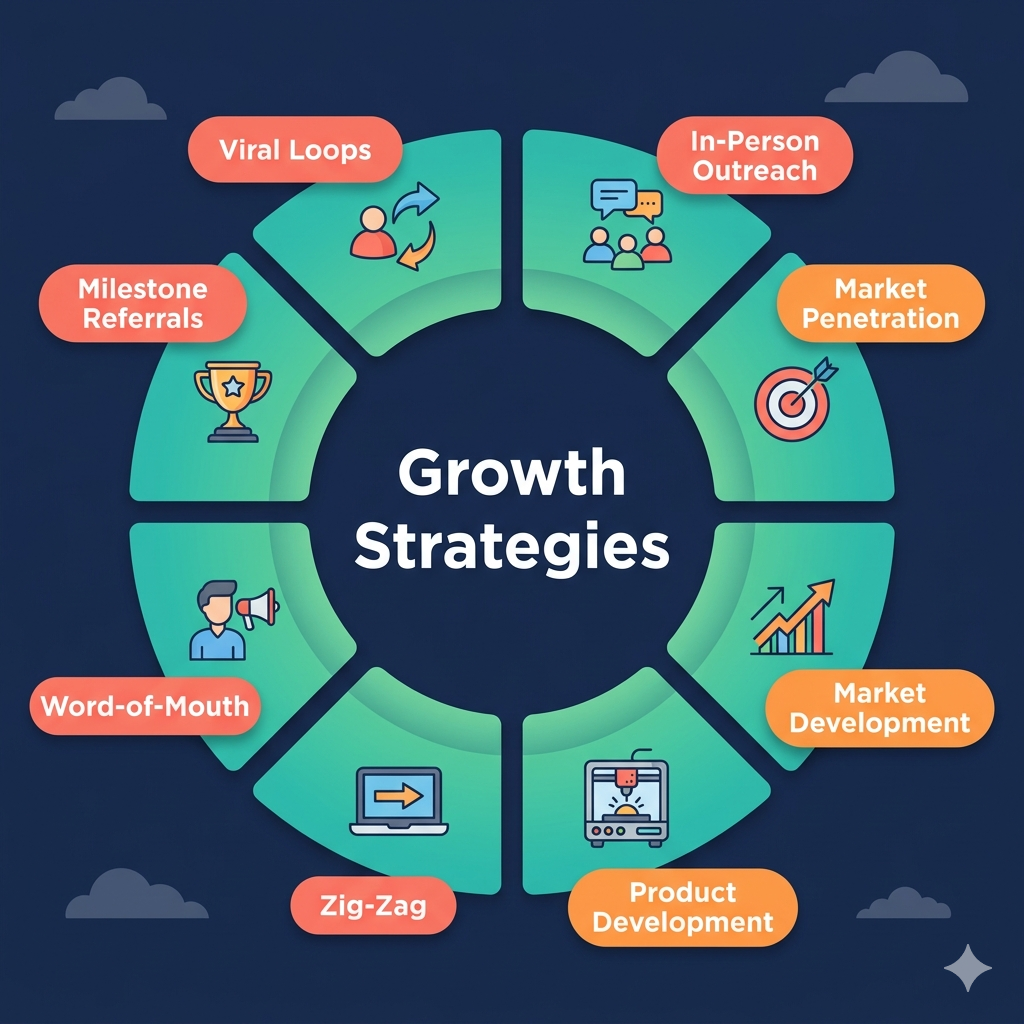
Businesses can achieve this by:
- Improving marketing campaigns to increase visibility.
- Offering promotions or discounts to attract repeat buyers.
- Enhancing product value or bundling services.
For example, an e-commerce store selling kitchen appliances can increase revenue by offering bundle deals or loyalty programs. This type of Business Growth Strategies is often low-risk because it leverages an already familiar audience.
Product Development: Innovating to Stay Ahead
Innovation plays a crucial role in long-term success. Developing new products or improving existing ones allows businesses to meet evolving customer demands.
Companies can gather insights through customer feedback, competitor analysis, and market trends. Adding new features, improving usability, or launching complementary products can significantly boost revenue.
Take the example of a digital marketing agency expanding its services to include AI-driven content creation or advanced analytics. This evolution strengthens its competitive edge and supports scalable Business Growth Strategies.
Market Expansion: Reaching New Audiences
Expanding into new markets—whether geographic or demographic—is another powerful growth method. This strategy involves targeting new customer segments or entering new regions.
Businesses can:
- Launch localized marketing campaigns.
- Adapt products to suit cultural preferences.
- Use digital platforms to reach global audiences.
For instance, a Bangladesh-based service provider offering US LLC formation services can target international clients through SEO and paid ads. This approach aligns well with modern Business Growth Strategies that leverage global connectivity.
Strategic Partnerships and Collaborations
Partnerships can accelerate growth by combining resources, expertise, and audiences. Collaborating with complementary businesses allows companies to expand their reach without significant additional investment.
Examples include:
- Co-marketing campaigns.
- Affiliate partnerships.
- Joint product launches.
A Shopify store might partner with influencers or affiliate marketers to increase visibility and sales. These collaborations often result in faster growth compared to solo efforts and are a key component of effective Business Growth Strategies.
Leveraging Digital Marketing
Digital marketing remains one of the most powerful tools for scaling a business. From SEO and PPC to social media and email marketing, each channel offers unique opportunities.
Key areas to focus on include:
- Search Engine Optimization (SEO) to drive organic traffic.
- Pay-Per-Click (PPC) advertising for immediate visibility.
- Content marketing to build authority and trust.
- Social media marketing to engage with audiences.
For example, running Google Ads campaigns for high-intent keywords can generate quick conversions, while SEO builds long-term visibility. Combining both creates a balanced approach within your Business Growth Strategies.
Customer Retention and Loyalty
Acquiring new customers is important, but retaining existing ones is often more cost-effective. Loyal customers not only generate repeat business but also act as brand advocates.
Businesses can improve retention by:
- Providing excellent customer service.
- Offering loyalty programs or rewards.
- Personalizing communication and offers.
A subscription-based business, for example, can increase retention by offering exclusive content or discounts to long-term users. Strong retention tactics are essential for sustainable Business Growth Strategies.
Data-Driven Decision Making
Modern businesses have access to vast amounts of data. Using analytics tools helps identify trends, measure performance, and make informed decisions.
Important metrics include:
- Customer acquisition cost (CAC).
- Lifetime value (LTV).
- Conversion rates.
- Return on ad spend (ROAS).
By analyzing these metrics, businesses can refine their strategies and allocate resources more effectively. Data-driven insights are at the core of successful Business Growth Strategies.
Scaling Operations Efficiently
Growth often brings operational challenges. Without proper systems in place, businesses can struggle to meet increased demand.
To scale effectively:
- Automate repetitive tasks.
- Use project management tools.
- Streamline workflows.
- Invest in scalable technology.
For example, using CRM systems and marketing automation tools can improve efficiency and reduce manual workload. Operational efficiency ensures that growth remains sustainable and manageable.
Building a Strong Brand
A strong brand differentiates your business from competitors and builds trust with customers. Branding goes beyond logos and colors—it includes messaging, values, and customer experience.
Businesses should focus on:
- Consistent messaging across all platforms.
- Creating a unique value proposition.
- Building emotional connections with customers.
For instance, brands that emphasize quality, reliability, or innovation often gain loyal followings. Branding is a long-term investment that supports all other Business Growth Strategies.
Financial Planning and Investment
Growth requires capital. Proper financial planning ensures that businesses can invest in opportunities without risking stability.
Key considerations include:
- Budgeting for marketing and expansion.
- Managing cash flow effectively.
- Securing funding when necessary.
Businesses may reinvest profits, seek investors, or apply for loans to fund growth initiatives. Financial discipline is essential for executing Business Growth Strategies successfully.
Embracing Technology and Innovation
Technology continues to reshape how businesses operate. Adopting new tools and platforms can improve efficiency and unlock new opportunities.

Examples include:
- AI-powered marketing tools.
- E-commerce platforms.
- Automation software.
- Data analytics systems.
For instance, using AI for content generation or customer support can significantly reduce costs while improving performance. Technology-driven innovation is a cornerstone of modern Business Growth Strategies.
Continuous Learning and Adaptation
The business landscape is constantly evolving. Staying updated with industry trends, customer preferences, and technological advancements is critical.
Businesses should:
- Monitor competitors regularly.
- Invest in training and development.
- Test and refine strategies continuously.
Adaptability ensures that businesses remain competitive and resilient in changing environments.
Frequently Asked Questions
What are Business Growth Strategies?
Business Growth Strategies are planned methods used to increase revenue, market share, and customer base.
They help businesses scale efficiently while maintaining long-term sustainability.
Why are Business Growth Strategies important?
They provide direction and structure for expanding a business in a competitive market.
Without them, growth can be inconsistent and difficult to manage.
Which Business Growth Strategies work best for small businesses?
Market penetration, digital marketing, and customer retention are highly effective for small businesses.
These strategies require lower investment and deliver measurable results.
How can digital marketing support Business Growth Strategies?
Digital marketing increases online visibility, attracts targeted traffic, and boosts conversions.
It allows businesses to scale quickly using SEO, ads, and content marketing.
How do you measure the success of Business Growth Strategies?
Success is measured using metrics like revenue growth, conversion rates, and customer retention.
Final Thoughts
Growing a business is a dynamic and ongoing process that requires strategic planning, consistent effort, and the ability to adapt. By implementing the right mix of marketing, innovation, customer focus, and operational efficiency, businesses can achieve sustainable success.
The most effective Business Growth Strategies are those that align with your goals, leverage your strengths, and respond to market demands. Whether you’re optimizing existing operations or exploring new opportunities, a well-structured approach will always provide a strong foundation for growth.

